Short Sessions, Deep Skills: Why We Don’t Do “One-and-Done” Training
At Urban Defense Academy, we prioritize muscle memory and long-term retention of the skills that protect what matters most. That’s why we structure our core courses using shorter, more frequent, highly focused sessions — and why we don’t offer one-day certification classes for advance training above the Basics class offerings.
What Most Firearms Training Gets Wrong
Most firearms training is built around the convenience of delivery, not the effectiveness of learning. A single weekend block is easy to put on a calendar, easy to travel for, and easy to sell. The problem is what happens two weeks later, when the class is over, the novelty has faded, and the “graduate” is left with a certificate and rapidly evaporating skills.
Cramming works about as well for armed self-defense as it does for a college exam. Research on learning has shown for decades that spaced repetition — short practice sessions distributed over time — dramatically outperforms massed practice for long-term retention. And this is our experience as instructors over decades of teaching.
Not only does industry research support this philosophy, our decades of experience teaching and evaluating students show it to be true. Armed self defense is a perishable skill. When not practiced to the point of muscle memory, it fades fast. When practiced to the point of muscle memory, the fading is slower. But we still see degradation of the skills over enough time and that is why refresher classes are highly encouraged from time to time after completing a course.
We’re interested in students who can still perform a year later, when it counts.
A Lesson from the Traditional Martial Arts
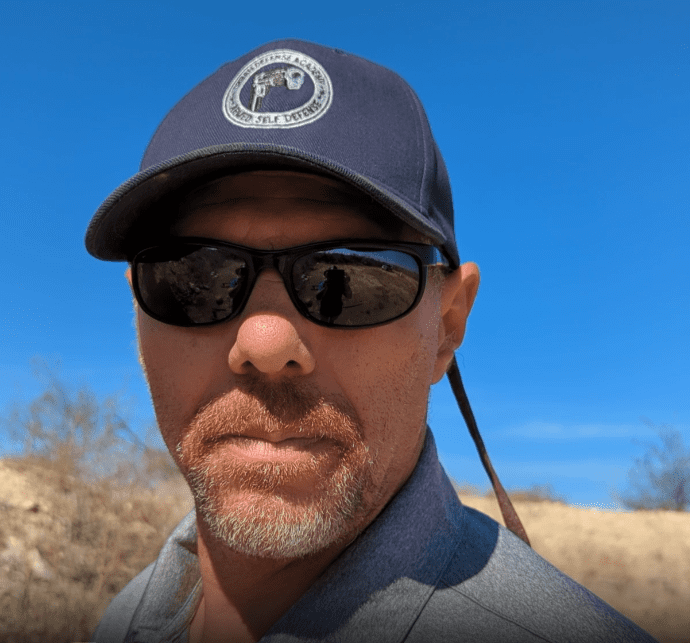
Our head instructor, Brian Simmons, has maintained a dedicated traditional martial arts practice for over 30 years. That world learned something centuries ago that modern training is only now catching up to: skill is built through regular, repeated, correct practice over time — not through heroic bursts of effort.
Nobody expects to earn a black belt in a weekend. Yet somehow the firearms industry has convinced people that a two-day marathon produces a defensive shooter. It doesn’t. It produces a person who had a busy weekend. And learned some skills that will fade quickly (our instuctors observations over years)
The mechanical skills of armed self-defense — presentation, reloads, malfunction clearance — must be practiced until they live in the body, not the head. That takes repetition, and repetition takes time. Our schedule respects that.
Why We Start Indoors, With Dry Fire
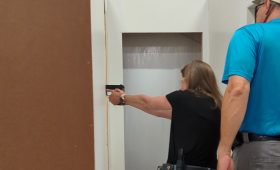
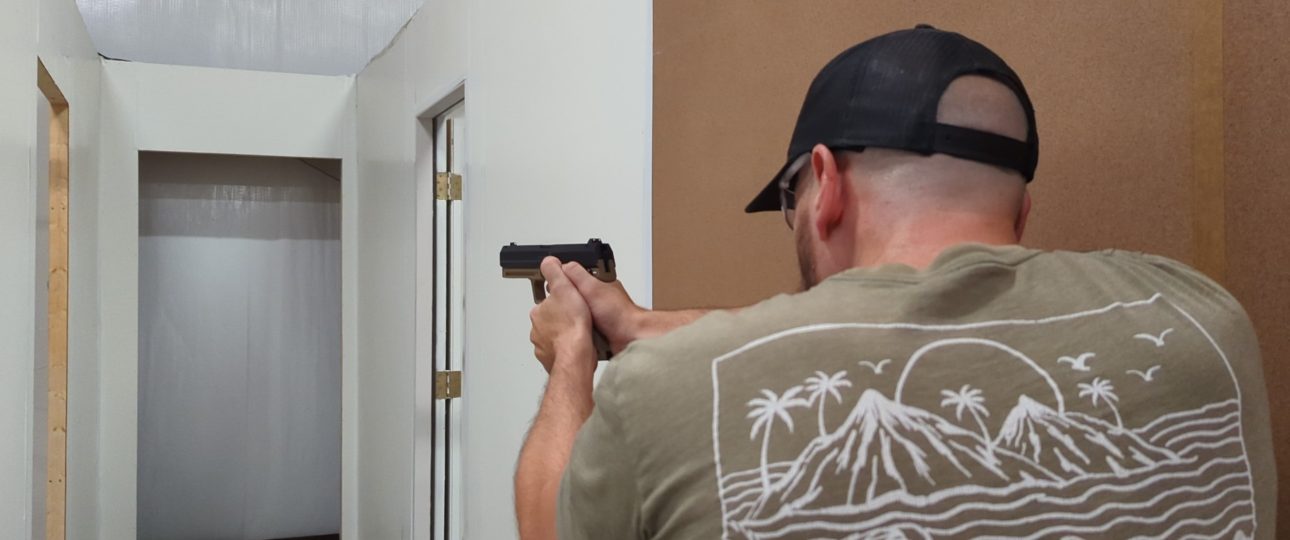
Look at how our courses are structured and you’ll notice a pattern: the first sessions are always indoors, working dry-fire fundamentals. Live-fire at the range comes later — after the mechanics are already in place.
This is deliberate. At the range — amid noise, managing mechanics of the gun (or technical handling) pressure (whether self-imposed or determined by the training exercises) — it’s more difficult to build a new skill. New skills need calm, focused, corrective repetition. That happens indoors, with snap caps, with an instructor’s eyes on your hands.
Once the mechanics are automatic, the range becomes what it should be:where we put the skills into practice and practice the the parts that can’t be learned under dry fire, like controling recoil, trigger control, etc.
Our Structure for Maximum Retention
By keeping our sessions shorter (1.5 to 2.0 hours) and spreading them across multiple days, we ensure you benefit from the power of spaced repetition. This allows your mind and body to absorb complex skills between classes — in fact, studies of motor learning show that much of the gain occurs between practice sessions, not just during them. When you come back the next week, you’re fresh and the skills have begun to settle in, especially if you practice dry-fire at home between class sessions.
Here is an example of a typical Practical Pistol Course Phase (10hr) schedule:
| Day | Duration | Focus |
|---|---|---|
| Day 1 | 1.5 hr | Indoor Dry Fire (Foundations) |
| Day 2 | 1.5 hr | Indoor Dry Fire (Skill Building) |
| Day 3 | 2.0 hr | Gun Range Live Fire (Application) |
| Day 4 | 1.5 hr | Indoor Dry Fire (Skills & Drills) |
| Day 5 | 1.5 hr | Indoor Dry Fire (Practice) |
| Day 6 | 2.0 hr | Gun Range Live Fire (Application) |
Each session opens with a review of the last one, so nothing gets abandoned and nothing gets assumed. By the final live-fire session, you’re not demonstrating what you memorized yesterday — you’re demonstrating what you know.
Three Ways to Train
Real people have real schedules. Shift work, kids’ weekends, business travel — life doesn’t always offer six tidy weeks. So every core course in our Practical Pistol and Carbine series is offered in three formats:
- Standard (6-Week) ★ Recommended — one session per week for six weeks. The steady weekly rhythm tends to produce the strongest long-term retention of any format we offer.
- Weekday Intensive — four consecutive weekday mornings, combining sessions into longer morning blocks.
- Weekend Cadence — once a week on a Saturday or Sunday, across four weekends.
These condensed formats aren’t shortcuts — they’re the same curriculum, taught by the same instructors, to the same standard, with skills built under dry-fire indoors first, then applied under live-fire at the range. The calendar changes. The curriculum doesn’t.
The best schedule is the one you’ll actually show up for — because a course you can attend beats a format you can’t.
Training Doesn’t End at the Final Session
One more thing we tell every student, in every format: the course doesn’t end your training — it equips it. Ten hours with us builds the foundation. What keeps that foundation solid is the dry-fire habit you take home with you, five minutes at a time. We teach you how.
The Bottom Line
You came to us because there’s something — or someone — you’re not willing to lose. Our job is to make sure the skills you leave with are still there months or years from now. That’s a higher bar than a weekend cram session can deliver. So we don’t offer one for anything other than Pistol Basics, which is designed to be entry level prior to advanced training courses such as the Practical Pistol Course Series.
This approach ensures quality repetition and higher skill retention, making you truly Confident, Capable, and Ready.
Have questions? Book a Free Consultation with our instructors today!
Urban Defense Academy — Liberty Hill, Texas “When survival is the only option!”